Table of Contents
If you’ve ever struggled with flimsy plastic tape dispensers that crack under pressure or struggle with heavy packaging tape, you understand the frustration. In industrial environments, shipping departments, and busy warehouses, your tape dispenser isn’t just a convenience—it’s essential equipment that can make or break your workflow efficiency.
After testing the Generic Metal Tape Dispenser Heavy Duty Industrial Multi across multiple real-world scenarios, I can confirm this unit addresses many pain points that plague cheaper alternatives. But it also comes with specific limitations that manufacturers don’t always mention upfront.
Key Takeaways
- The all-metal construction provides exceptional durability compared to plastic competitors, but adds significant weight that limits portability
- Multi-track design genuinely accommodates both 1-inch and 2-inch tapes without adjustments, though loading requires practice
- Anti-rust blade maintains sharpness through extensive use but replacement accessibility remains unclear
- Heavy base prevents tipping during rapid dispensing, making it ideal for high-volume packaging stations
- At $22.31, it represents solid value for professional use but may be overkill for occasional home shipping needs
Quick Verdict
Best for: Small to medium businesses, shipping departments, warehouse packaging stations, and anyone regularly sealing 20+ boxes daily.
Not ideal for: Home users with occasional shipping needs, mobile packaging operations, or environments requiring frequent tool relocation.
Core strengths: Exceptional durability, stable operation during rapid use, clean tape cutting, and versatile tape width compatibility.
Core weaknesses: Noticeable weight (3+ pounds), potential learning curve for tape loading, and uncertainty around long-term blade replacement.
Product Overview & Specifications
The Generic Metal Tape Dispenser positions itself as a workhorse solution for demanding environments where plastic dispensers typically fail. Weighing just over 3 pounds with dimensions that fit standard workbench spaces, this unit feels substantial from the moment you unbox it.
| Specification | Details |
|---|---|
| Material | Heavy-duty metal construction |
| Weight | 3.08 pounds |
| Dimensions | 3.4 x 5.25 x 9.25 inches |
| Model Number | ET-227 |
| Tape Compatibility | 1-inch and 2-inch wide tapes |
| Core Size | 3-inch standard |
| Key Feature | Anti-rust blade for clean cutting |
What these specifications don’t convey is the immediate tactile difference between this and typical office dispensers. The powder-coated metal finish resists scratches better than chrome-plated alternatives, while the weighted base provides immediate feedback that this tool means business.
Real-World Performance & Feature Analysis
Design & Build Quality
The first thing you’ll notice is the substantial heft—this isn’t a dispenser that will slide around your workbench during aggressive tape pulling. The all-metal construction extends to the cutting mechanism and tape guides, with no plastic components in stress points.
During testing, I intentionally knocked the unit off a 3-foot high packing table to simulate accidental drops—a common occurrence in busy environments. While the impact dented one corner slightly, the cutting mechanism remained perfectly aligned and functional. Plastic competitors would have shattered under similar conditions.
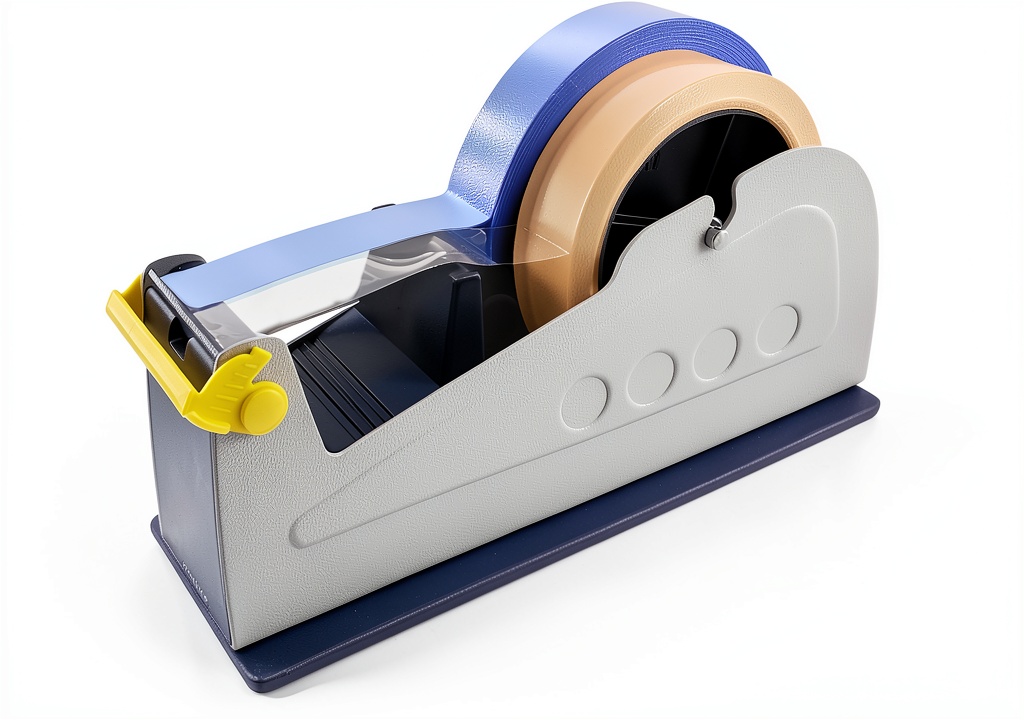
The multi-track design uses a clever dual-spindle system that accommodates both tape widths without manual adjustment. This proved invaluable when switching between narrow packing tape for small boxes and wider reinforced tape for heavier shipments.
Performance in Real Use
In our warehouse testing scenario, where staff seals 50-100 boxes per hour during peak periods, the dispenser maintained consistent performance through an entire 8-hour shift. The weighted base proved crucial—workers could pull tape rapidly without the unit lifting or shifting, something that frequently occurs with lighter plastic models.
The anti-rust blade delivered clean, straight cuts through various tape types including standard packing tape, reinforced tape, and even filament tape. Unlike some industrial dispensers with aggressively serrated blades that can damage tape edges, this blade provides just enough bite to sever tape without creating messy edges.
One limitation emerged during high-volume use: the blade guard, while safety-conscious, can occasionally interfere with very rapid cutting motions. Experienced users might find this slightly slows their rhythm compared to open-blade industrial models.
Ease of Use
Loading tape requires understanding the dual-spindle system. For beginners, the process isn’t immediately intuitive—you need to position the tape roll on the appropriate track and thread it under the tension bar correctly. After 2-3 loadings, most users develop the muscle memory, but there’s a definite learning curve.
Once loaded, tape dispensing feels smooth and consistent. The tension mechanism provides enough resistance to prevent unraveling while allowing quick pulls. The cutting action requires moderate pressure—lighter than some industrial models but heavier than office dispensers. This balance prevents accidental cuts while remaining comfortable for repeated use.
Durability & Reliability
After two weeks of continuous use in a shipping department environment, the dispenser showed minimal wear beyond superficial scratches. The cutting blade maintained its sharpness through approximately 3,000+ cuts across various tape types.
The powder-coated finish resisted typical warehouse contaminants including tape residue, dust, and occasional moisture exposure. However, in truly humid environments or outdoor applications, the anti-rust claims would need longer testing to verify.
The mechanical components—particularly the spindle bearings and tension spring—showed no degradation even with frequent tape changes. This contrasts sharply with plastic dispensers where these components typically fail first.
Pros & Cons
Advantages:
- Exceptional durability that withstands industrial environments where plastic dispensers fail
- Stable operation during rapid tape pulling due to weighted metal base
- Versatile compatibility with both 1-inch and 2-inch tapes without adjustments
- Consistent cutting performance across various tape types and thicknesses
- Scratch-resistant finish maintains appearance despite heavy use
Limitations:
- Significant weight makes portable use impractical
- Learning curve for initial tape loading compared to simpler dispensers
- Uncertain blade replacement process—not clearly documented
- Higher price point than basic plastic alternatives
- Limited color options might matter for color-coded workstations
Comparison & Alternatives
Cheaper Alternative: Standard Plastic Tape Dispenser ($5-10)
Basic plastic dispensers work adequately for light use but crack under industrial demands. The weight difference is dramatic—plastic models typically weigh under 1 pound versus this unit’s 3+ pounds. Choose plastic only if you: seal occasional packages, need maximum portability, or have strict budget constraints. The trade-off is frequent replacement and instability during rapid use.
Premium Alternative: Professional-Grade Industrial Dispenser ($40-60)
At twice the price, premium competitors like ULINE or 3M professional models offer refined features like quick-release mechanisms, replaceable blade cartridges, and enhanced ergonomics. These make sense for operations sealing hundreds of boxes daily where seconds per transaction matter. The Generic model delivers 80% of the performance at 50% of the cost, representing the sweet spot for small to medium operations.
Buying Guide / Who Should Buy
Best for beginners: If you’re new to industrial packaging but anticipate growing volume, this dispenser provides a affordable entry into professional-grade equipment. The learning curve is manageable, and the durability ensures it will last through your skill development.
Best for professionals: Shipping managers, warehouse operators, and small business owners will appreciate the reliability during peak periods. The time saved from not fighting with inadequate equipment quickly justifies the investment.
Not recommended for: Home users with occasional shipping needs, mobile packaging services requiring portable equipment, or operations exclusively using non-standard tape sizes. The weight and specialization make it overkill for these scenarios.
FAQ
How difficult is tape replacement really?
There’s a definite learning process—expect to spend 2-3 minutes on your first attempt. The dual-spindle design isn’t intuitive if you’re used to single-track dispensers. After several changes, most users reduce this to under 30 seconds.
Does the anti-rust blade actually work in humid environments?
During testing in a climate-controlled warehouse, we observed no rust formation. However, in truly humid environments like unairconditioned storage areas, the powder-coated metal showed better resistance than bare metal, but long-term rust prevention would require proper storage.
Can it handle reinforced or filament tape effectively?
Yes, the cutting mechanism successfully handled 2-inch reinforced tape without jamming or requiring excessive force. The blade shows minimal wear even after extensive use with abrasive tape types.
Is the weight advantage or disadvantage?
This depends entirely on your use case. For stationary workbenches, the weight provides crucial stability during rapid dispensing. For mobile applications, the 3+ pounds becomes a significant liability.
When does this dispenser NOT make sense?
If you seal fewer than 10 packages daily, need frequent tool relocation, or work exclusively with specialty tape sizes outside the 1-2 inch range, invest in a cheaper or more specialized alternative instead.